True personalized multiview at scale.
Let viewers build and watch personalized multiview experiences without the cost and complexity of traditional approaches. Synamedia makes personalized multiview scalable, while he...


Let viewers build and watch personalized multiview experiences without the cost and complexity of traditional approaches. Synamedia makes personalized multiview scalable, while he...



When viewers can choose their own four-channel layout, the number of possible arrangements rises quickly. For example: Selecting 4 channels from 30 feeds creates 657,720 possible combination

Client-side multiview often relies on proprietary players, multiple integrations, multiple decodes, and stream synchronization, making rollout across devices harder.

Server-side architectures reduce player complexity, but require transcoding for each arrangement, which increases cost and limits scalability.
Synamedia’s multiview solution assembles requested channels at the packager layer using HEVC tile remixing, avoiding full transcoding for every arrangement and minimizing impact on existing workflows.
And because scalable multiview also needs to look right on screen, Synamedia applies deep video compression expertise to help ensure clean, crisp tiled output.
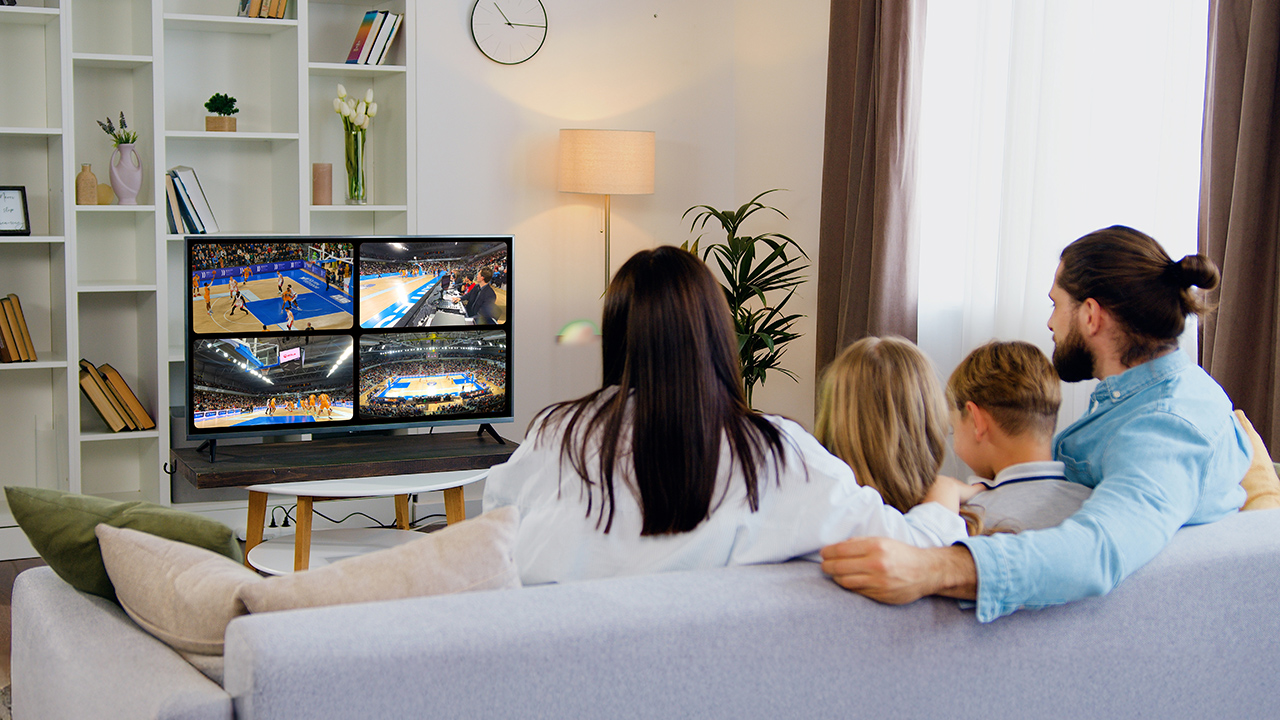
Synamedia multiview assembles requested channels at the packager layer instead of pre-building every arrangement.
No player replacement, minimal client changes, and no major change to the video headend.
Enable viewers to select the channels they want, without creating an operational burden for every possible combination.
The architecture fits both deployment models and reduces strain on legacy environments.

Assemble requested multiview layouts dynamically at the packager layer instead of creating and storing every permutation in advance.

Use HEVC tile remixing to compose multiview streams efficiently while applying advanced video compression expertise to help maintain clean, crisp output.

No player replacement required. Client changes are limited mainly to request handling and API interaction.

Support a simple API-based model for defining channel selections, arrangements, and business logic.
Synamedia Multiview enables viewers to watch multiple live channels in a single screen experience, with support for personalized channel selection. It is designed to help operators deliver flexible multiview experiences without relying on traditional architectures that become costly or difficult to scale
Client-side multiview often depends on proprietary players, multiple integrations, multiple decodes, and stream synchronization. Synamedia Multiview reduces that burden by assembling requested channel combinations at the packager layer, which minimizes impact on the player and simplifies rollout across devices
Traditional server-side approaches typically require transcoding for each multiview arrangement, which increases cost and makes scale harder to achieve. Synamedia Multiview avoids full transcoding for every possible layout by using lightweight HEVC tile remixing at the packager layer, creating a more economical and scalable architecture.
No. Synamedia Multiview is designed to avoid player replacement. Client-side changes are kept minimal and are primarily limited to requests and API interaction, reducing disruption to existing deployments.
Yes. Synamedia Multiview is built to support subscriber-driven multiview experiences, allowing viewers to choose their own channel combinations instead of being limited to a fixed set of predefined layouts.
Scale is one of the main design goals. When viewers can choose their own four-channel layouts, the number of possible combinations grows rapidly. For example, selecting 4 channels from 30 feeds creates 657,720 possible combinations. Synamedia Multiview addresses this by assembling requested arrangements dynamically at the packager layer rather than pre-building every option.
No. HEVC tiling provides a scalable and standards-based foundation for multiview, but the final viewing experience also depends on how the tiled video is encoded and optimized. Synamedia combines efficient multiview assembly with deep video compression expertise to help ensure clean, crisp output.
Yes. In our solution, each tile within a multiview channel can support multiple language tracks, helping operators deliver a more flexible viewer experience.
Yes. In our solution, each tile within a multiview channel can support closed captions, helping preserve important accessibility features within the multiview experience.
Yes. Synamedia Multiview supports both on-prem and cloud deployment models, giving operators flexibility to integrate it into existing environments with less impact on legacy workflows.

Sign up to Synamedia events and news