Unify, Automate and Scale: The Blueprint for the Future of TV Advertising



After years helping broadcasters and operators navigate the evolution of addressable advertising, I believe our industry has reached a critical inflection point. The question isn’t whether television will evolve, but how we successfully combine the reach and trust of broadcast with the precision, accountability, and agility of digital to engage every audience, everywhere.
As we approach 2026, fragmentation remains the industry’s biggest obstacle: fragmented systems, fragmented measurement, fragmented demand. Overcoming it requires more than incremental change. Broadcasters need a connected, intelligent platform. At Synamedia Iris, we are actively building and investing in three foundational pillars: automation, unification, and platformisation, with localisation embedded across every layer.
Automation is no longer optional. It’s the foundation for scaling sophisticated, data-driven TV advertising. Automated trading connects supply and demand seamlessly, enabling real-time decisioning, faster deal execution, and true one-to-one impression delivery across all devices.
For broadcasters and operators, automation reduces friction and increases monetisation efficiency. For advertisers, it delivers speed, precision, and flexibility. Extending automation to broadcast inventory also helps re-attract ROI-driven budgets that migrated to digital platforms, bringing investment back to environments that deliver unmatched reach, attention, and brand memorability.
Crucially, automation is evolving beyond workflow efficiency toward continuous, intelligent optimisation, allowing campaigns to adapt dynamically to performance signals without increasing operational overhead.
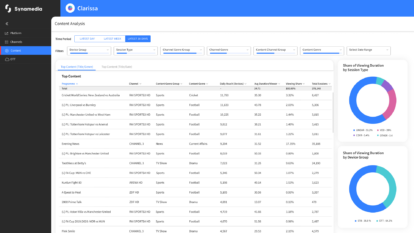
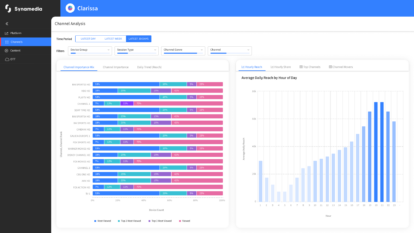
Measurement today remains fragmented across legacy broadcast systems and digital tools, creating blind spots, duplicated reach, and inefficient frequency management. At Synamedia Iris, we focus on unifying inventory and measurement to provide a transparent, holistic view of audience performance, one that identifies unique reach, eliminates duplication, and enables true cross-platform accountability.
The unification happens top-down, working with channels and MSOs to optimise playout capabilities, and bottom-up, leveraging connected devices and viewership data. On the inventory side, we extend addressability to previously inaccessible devices, including legacy endpoints, without requiring disruptive and expensive infrastructure overhauls.
The result is predictive insight into inventory availability, giving planners greater confidence and reducing wasted impressions before campaigns even go live.
This matters. Less than one-third of European buyers report satisfaction with CTV ad transparency. When buyers and sellers operate from a single source of truth, efficiency rises, waste declines, and every impression delivers measurable value.
Platformisation is the natural outcome of automation and unification. It enables true scale across connected, semi-connected, and unconnected environments.
This allows broadcasters to monetise every screen, open inventory to digital and performance-led demand, and optimise delivery with full visibility and control.
Legacy environments are often dismissed as “not the future.” I see them differently; they are actively included in our platform vision, ensuring every audience, regardless of device, is addressable, measurable, and valuable.
Platformisation creates the foundation for adaptive monetisation strategies, where decisions are informed by real-time performance, audience context and business objectives.
Scale delivers value only when it is relevant. Localisation ensures advertising reflects cultural, linguistic, and contextual realities. By embedding localisation into every layer of the platform, broadcasters can deliver targeted, meaningful advertising at scale, across Europe, the US, and high-growth markets such as India, Brazil, and Mexico.
Localisation is also evolving beyond static targeting toward dynamic, context-aware delivery, ensuring relevance even as environments and audiences change in real time.
Once automation, unification, and localisation are in place, Agentic AI powers continuous optimisation. Intelligent agents learn from performance data, adjust campaigns in real time, and autonomously optimise outcomes across environments.
This isn’t just about speed, it’s about precision at scale, where every opportunity is evaluated to deliver the highest-value impression, without sacrificing control or compliance.
The result: faster decision-making, reduced manual intervention, and campaigns that improve continuously, freeing teams to focus on strategy, creativity, and audience engagement.
The opportunity is enormous, particularly in emerging markets where relevant, localised advertising can unlock new revenue streams. Yet fragmented ecosystems still limit impression-level reporting and programmatic sophistication.
In Europe, nearly two-thirds of advertisers view addressable and CTV as central to their strategies. In the US, ad-supported platforms, including CTV, broadcast, and cable, now account for 73.6% of TV viewing, with streaming alone reaching 44.8% in May 2025. These figures underscore both the scale of the opportunity and the urgency to unify systems.
As traditional mass reach declines, addressable advertising must deliver precision at scale. The question is not whether this transformation will happen, but who will lead it, and how fast they will continue investing to make it real.
2026 is already here, but the true horizon is 2030: where we see a TV advertising ecosystem that is fully automated, unified, and intelligent. At Synamedia Iris, we are laying that foundation today, investing in technology, expertise, and partnerships to help broadcasters evolve from fragmented systems into a single, data-driven platform.
The future of TV advertising is not about adding complexity. It is about orchestrating decisions end-to-end, so every impression works harder and every campaign delivers measurable outcomes.
Because the future of TV is not about replacing what works, it’s about bringing the best elements of different ecosystems together.
Guy Southam is Director of Product Development for Advanced Advertising at Synamedia, where he helps pay TV operators and video providers unlock new revenue through addressable and data-driven TV advertising solutions. Prior to joining Synamedia, Guy worked as Product Owner for Advanced Advertising and Data at Liberty Global.



Sign up to Synamedia events and news