
Advertising is becoming a strategic growth opportunity
For many telecom operators, connectivity is no longer enough to deliver long-term growth.
As traditional revenue slows, operators are looking for new ways to create value from the assets they already own.
Industry analysts increasingly identify advertising and data monetisation as one of the most promising growth opportunities (Deloitte, Telecommunications Industry Outlook 2025; PwC, Data Monetisation and Beyond, 2025; BCG, Telecommunications Industry, 2026).
Operators already possess many of the assets advertisers value most: trusted customer relationships, first-party data and premium digital inventory. Increasingly, these assets are being transformed into advertising platforms. JioAds now gives advertisers access to more than 450 million consumers; Airtel Ads reaches over 330 million customers; and T-Mobile Advertising Solutions combines first-party data from 180 million consumers with more than 240 million owned screens.
A global trend is emerging
This is not a regional phenomenon.
Across Europe, Asia, North America, Africa and Latin America, operators are investing in advertising platforms built on first-party data.
More than 10 major telecom operators now operate advertising platforms at a national or regional scale, including Orange Advertising, Deutsche Telekom, T-Mobile, Airtel Ads, JioAds, TIM Ads, MTN Ads and Spectrum Reach (2024–2026).
Despite operating in very different markets, they are following a similar path. Telecom operators are no longer focused solely on selling connectivity; they are building media businesses.
A common model is emerging
Across the industry, operators are investing in four core capabilities:
- Premium-owned inventory across TV, streaming and mobile
- First-party identity and audience data
- Advertising technology and programmatic activation
- AI-powered planning, measurement and optimisation
These capabilities appear consistently across operators of different sizes and regions, suggesting that the industry is converging on a common advertising model.
AI is becoming part of the advertising platform
AI is rapidly becoming a competitive differentiator.
SK Telecom, KT, LG Uplus and Charter Spectrum Reach have all introduced AI-powered advertising capabilities to improve campaign planning, audience targeting and optimisation (Korea JoongAng Daily, 2024; Chosun Biz, 2025; KED Global, 2024; Charter Communications, 2025).
Advertiser demand is evolving at the same pace.
Today, 53% of advertisers consider Addressable TV a “must-buy”, while 56% say they would increase investment with better measurement and optimisation. In addition, 68% of advertisers increasing their Addressable TV spend are funding that investment by reducing traditional linear TV budgets (Comcast Advertising, 2024).
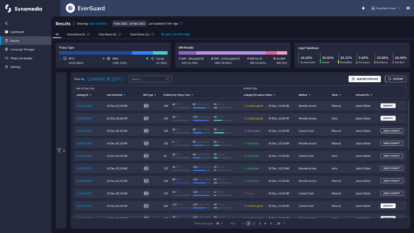
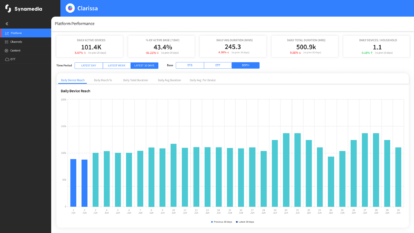
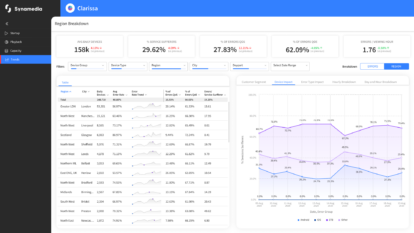
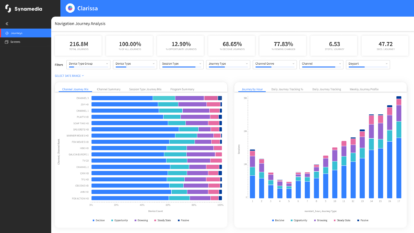
The opportunity is no longer simply to deliver more impressions. Operators that combine first-party data, premium inventory and AI-enabled decisioning are increasingly well positioned to capture advertising budgets as they shift toward more addressable, measurable channels.
The next challenge is integration
Building individual advertising capabilities is only the beginning.
The next challenge is connecting inventory, audience data, campaign execution and measurement into one operating model.
Looking across today’s market leaders, the direction is remarkably consistent. Telecom operators are simplifying advertising operations while making better use of their customer relationships and digital assets.
As advertising becomes a larger part of telecom growth strategies, success will depend less on adding new capabilities than on connecting the ones operators already have.
About the Authors
Girish Mamtani:
Girish Mamtani is a Competitive & Market Intelligence Specialist with deep expertise in analysing market dynamics, competitor activity, and industry trends to support strategic decision-making. He brings a strong commercial lens to intelligence work, helping organisations identify opportunities, anticipate shifts, and sharpen positioning in fast-moving markets.
Pauline Rabette:
Pauline Rabette is a Senior Marketing and Growth Leader with over 15 years of experience across streaming, Pay TV, and AdTech. She has worked with leading media and technology companies, including Canal+, Freewheel (Comcast), and Synamedia, driving go-to-market strategy, lifecycle marketing, and revenue growth through data-led decision-making. Her expertise sits at the intersection of product, audience growth, and monetisation, with a strong focus on building scalable strategies across B2C and B2B2C models.